
Five Winter Euro Big-Game Fishing Itineraries That'll Keep Your Summer Alive
Looking for the best winter fishing in Europe? Sure, peak season may be coming to a close, but there’s no need for the off-season to slow down your angling. Just...
Free Delivery on all OrdersShop Now
Free Delivery on all Orders
It’s no secret that we’re incredibly proud of our partnership with the International Game Fish Association (IGFA).
The honour of being the official footwear partner of this globally recognised non-profit organisation is not lost on us; for nearly a century, the IGFA has not only collected and maintained the official world records for fish catches, but it has also acted as the single-most important authority in setting and monitoring recreational fishing standards and practices around the world.
Strike founder and lifelong catch-and-release angler Stephen Palmer has been a card-carrying member of the IGFA since long before our footwear brand was established, morally aligned with its ethical stance on fishing and support of educational platforms aimed at the next generation of anglers.
“We got together with the International Game Fish Association because they have a very strong voice in teaching young kids about the sea, about sustainability and understanding the science of sustainable fishing,” he told the UK’s Sidetracked magazine in early 2026. “Their voice sang true to what we wanted to do.”
Today, we not only share its mission to protect the future of our sport and the waters that sustain it; we financially back it, too.
Want to know which big names in big-game your Strike purchase will help support? Here are three to get you started:


For a highly regarded species that brings mile-high stacks of tourist dollars to some of Central America’s best big-game destinations, there’s a remarkable lack of biological awareness around the instantly recognisable roosterfish. From migration patterns to population size and overall health, gaping holes in the scientific community’s knowledge have existed for far too long. A sorry state of affairs that the IGFA decided to tackle head-on in 2022.
The IGFA Roosterfish Research Program was set up to help take steps towards effective management of roosterfish stocks. By bringing the world’s leading roosterfish experts closer to the IGFA’s network of supporters, an effectively controlled fin-clipping initiative is forming a bedrock of genetic data that policymakers can use in their fishery management decisions.
In just a few years, the program has already indicated that roosterfish stock is divided into regional and largely self-sustaining subpopulations – a breakthrough observation that shows the species is more vulnerable than perhaps first thought, and that can be used to double down on the importance of catch-and-release when targeting these exotic icons.


Here’s a fact that should trouble every big-game angler out there: the average size of striped marlin caught off the coast of Mexico is trending downward. But why, exactly, is yet to be determined.
It’s a question that’s really highlighted how little we know about striped marlin. Like roosterfish, they’re as mysterious as they are prized. For example, scientists have never really known at what size the eastern central Pacific species can begin to reproduce. This is an essential knowledge gap that needs filling before any science-based action can be taken to address these newfound sizing worries.
The IGFA is looking for answers in partnership with highly regarded professors in La Paz. They’re putting more than three decades of catch data and measurements to work in more modern ways to establish the size at which striped marlin sexually mature. It’s a data point that the IGFA hopes will bring new insights into the fish’s spawning behaviours, and help policymakers to build a more biologically beneficial minimum legal size (MLS) that benefits you, your fishing, and the future of these world-famous fish.


Earning a distinctive bone-jarring strike from a giant golden dorado is one of freshwater fishing's great obsessions; this aggressive, hard-to-read big-game predator draws anglers to the rivers of South America from all over the world. But only now is basic knowledge about the human impact on the golden dorado starting to be explored. And not a moment too soon: growing threats from overharvest and habitat degradation across their native range have put the species in real danger.
The IGFA's response? To build the essential science fast. Working with Dr. Andy Danylchuk of the University of Massachusetts Amherst, and led on the ground in Argentina by IGFA Trustee Juan Pablo Gozio, the IGFA is taking a two-pronged approach to data gathering. First, advanced genetic analysis is helping to map golden dorado population structures across Brazil, Bolivia, Uruguay, Paraguay, and Argentina. Second, understanding the factors driving the demand for golden dorado is identifying the disparities between local economies and species ecologies. This is the kind of foundational data that effective conservation policy can — and will — actually be built on.


Looking for the best winter fishing in Europe? Sure, peak season may be coming to a close, but there’s no need for the off-season to slow down your angling. Just...

No beauty contests were won in the making of this journal post.Picture your dream big-game trip. Bright sunshine? Sparkling seas? Spectacular surrounds? And stunning species leaping majestically at the end...

Meet Kieren Faisey – charter captain, international guide, tackle brand owner, and new Strike ambassador. Want to book one of the top tuna fishing charters in the UK? You’d better...

Our favourite fishing stories aren't just about the catch. They're about the water, the waiting, the wildlife, and the work that comes before and after every hookup.

As one of the Mediterranean's mightiest predators, landing one of these aggressive pelagic–coastal bruisers is a sought-after activity. Even more so when you consider that amberjack can grow up to...

When you invest in a pair of Strike’s saltwater performance shoes, you’re buying into more than just footwear for big-game fishing. You’re taking ownership of a spectrum of intricate and...

Nik Teal, England’s big-game fishing team captain and Strike Ambassador, hands over his best tips and marks for catching tuna, marlin, halibut, and swordfish in European waters.

On 30 October 2025 we headed to Fort Lauderdale, Florida to help honour this year’s recipients of The International Game Fishing Association (IGFA) Tommy Gifford Awards: the inspirational big-game captains,...
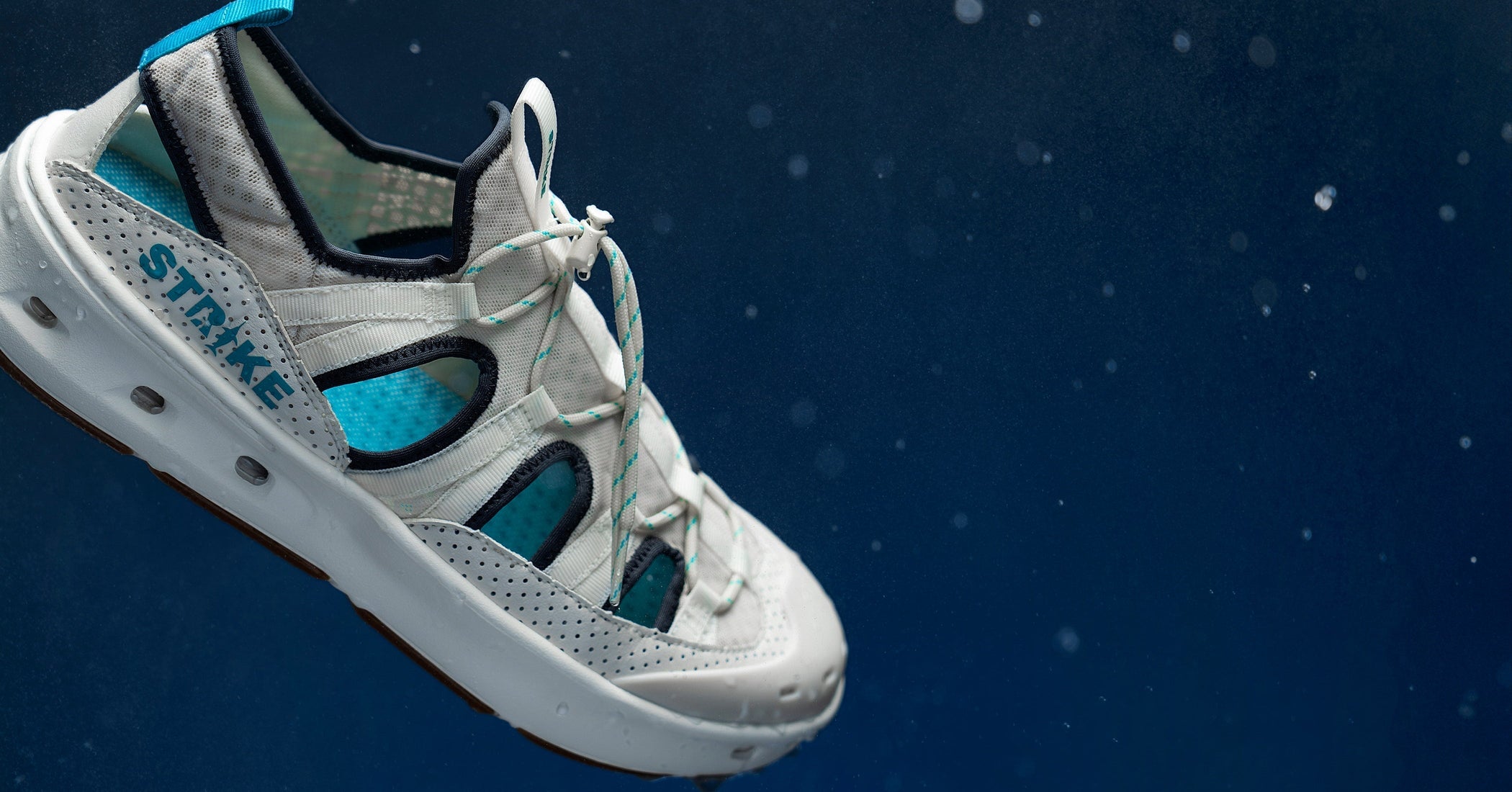
Strike's big game fishing shoes are engineered for, and by, offshore anglers just like you. Our saltwater fishing boots and performance angling footwear deliver better deck grip, quick-drying and breathable...
If you’re compiling your bucket list of the world’s best fishing destinations for giant trevally and yellowfin tuna, Oman should be very near the top. It’s just one of the...

We’re only ever one wet deck away from turning the tuna trip of a lifetime into a nightmare. Just ask Stephen Palmer and Sandro Onofaro, the masterminds behind new saltwater...

If you’ve been searching for this year’s best footwear for saltwater fishing, ICAST 2025 was the place to find it. In July, we introduced Strike’s all-new non-slip fishing footwear to...

Built for water

Free delivery on all orders

Simple returns

By anglers, for anglers